
Overview of Tolkien’s Essay on Fairy Stories
Tolkien’s 1939 lecture, later expanded into the 1947 essay On Fairy‑Stories, outlines his view that fairy tales are a form of sub‑creation rooted in myth. The essay, now available in PDF, traces its publication history and influence on his later work. It remains a key text for fantasy!?
1.1 Historical Context and Publication History
Tolkien’s seminal 1939 lecture at St Andrews University, delivered as the Andrew Lang Lecture, introduced his concept of faërie and sub‑creation. Though initially presented to a small academic audience, the lecture’s ideas quickly spread through Tolkien’s correspondence and informal discussions.
In 1947, the essay was formally published in the Trans‑Atlantic Review as “On Fairy‑Stories,” a concise yet profound articulation of his view that fantasy literature is a secondary world created by the author’s imagination.
The 1964 edition, included in the Collected Works, expanded the essay with additional reflections and a more detailed discussion of mythic motifs.
Over the decades, the text has been reprinted in various collections, including the 1990 Oxford University Press edition, and remains in print in digital form.
Today, many universities provide free PDF copies through institutional repositories, and the essay is also available on the Internet Archive and other open‑access platforms.
Its continued availability in PDF format ensures that students and scholars can engage with the original text without barrier, preserving the integrity of Tolkien’s ideas for future generations.
Readers may also consult the 2021 Internet Archive edition, which includes a scanned copy of the 1947 manuscript, offering a glimpse of Tolkien’s notes that enhancestudy.
Tolkien’s essay delves into faërie as a realm of sub‑creation, the role of myth, the moral resonance of fairy tales, and the distinction between fantasy and realism. It emphasizes imagination’s power to forge secondary worlds that echo ancient lore. It also examines storytelling ethics deeply.
2.1 The Concept of Faërie and Subcreation
Tolkien’s essay, now widely distributed as a PDF, articulates a nuanced view of faërie as a realm of imaginative sub‑creation that mirrors the ancient act of divine creation. He argues that true fantasy writers, by crafting secondary worlds, participate in a creative dialogue with the mythic past. Faërie, he insists, is not mere escapism; it is a disciplined art that demands internal logic, moral depth, and a reverence for the “sub‑creative” process. The essay traces the lineage of fairy tales from oral traditions to modern literature, emphasizing how each narrative layer preserves a fragment of collective memory. By examining the structure of classic stories, Tolkien demonstrates how sub‑creation can serve as a conduit for exploring universal themes such as heroism, sacrifice, and the tension between destiny and free will. The PDF edition preserves the original lecture’s tone, offering scholars a direct window into Tolkien’s evolving ideas about the relationship between myth, imagination, and literary craft. This text remains essential for anyone studying the foundations of fantasy literature and its ethical implications. The PDF edition, freely accessible through academic repositories, invites readers to examine Tolkien’s meticulous layering of mythic motifs, his use of linguistic play, and the subtle interplay between narrative structure and thematic depth, thereby enriching the study of fantasy as a disciplined art form. form For all

Tolkien’s Definition of Fantasy Literature
Tolkien’s PDF essay defines fantasy as sub‑creation rooted in myth, demanding internal logic, moral depth, and a disciplined imagination that mirrors divine creation. It remains a core guide for modern fantasy writers. Its concise analysis guides.
3.1 The Role of Myth and Folklore
Tolkien’s 1939 lecture, later published as the 1947 essay On Fairy‑Stories, argues that myth and folklore are the well‑spring of fantasy. In the PDF edition, he explains that a true fairy tale must draw upon ancient narratives, yet transform them into a new, internally consistent world. He stresses that a “sub‑creation” of a writer should respect the “law of the world” that governs the original myth, thereby preserving its moral resonance while allowing imaginative expansion. The essay cites examples from Norse sagas, Celtic ballads, and medieval romances, showing how these sources provide archetypal patterns that can be re‑imagined. Tolkien insists that the use of folklore is not mere borrowing; it is a disciplined dialogue between the author and the collective unconscious, producing stories that feel both familiar and novel. The PDF version includes notes that highlight how this approach influenced his later works, such as the Elvish songs in The Lord of the Rings and the structure of the Silmarillion. By grounding fantasy in myth, Tolkien believes the genre can achieve a depth that transcends simple escapism, offering readers a chance to encounter the “real” through the “imagined.” Readers accessing the PDF can also consult the companion notes that Tolkien added in later editions, which elaborate on the interplay between mythic motifs and the ethical dimensions of his fictional worlds. The PDF is freely available for use.!!!

Influence on Tolkien’s Later Works
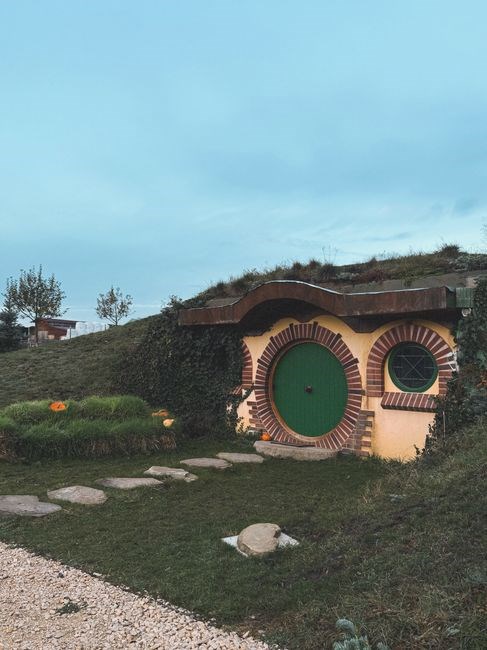
Tolkien’s 1939 essay shaped his mythic worldbuilding, guiding Middle‑earth and the moral weight of the Ring. The PDF shows how he wove fairy‑tale logic into the Hobbit’s quests, the Silmarillion’s lineage, and the grand saga of The Lord of the Rings.!
4.1 Connections to The Hobbit and The Lord of the Rings
Tolkien’s 1939 lecture, later expanded into the 1947 essay “On Fairy‑Stories,” is a foundational blueprint for his later epic. The PDF edition of the essay reveals how he translates the fairy‑tale logic of sub‑creation into the structure of Middle‑earth. In The Hobbit, the simple quest motif echoes the “hero’s journey” he describes, while the moral ambiguity of characters such as Gollum reflects his discussion of the dual nature of good and evil in fairy lore. The essay’s insistence on a “world of its own” informs the richly detailed geography of the Shire, Rivendell, and the Misty Mountains, all of which serve as narrative microcosms. In The Lord of the Rings, the Ring itself becomes a fairy‑tale artifact whose corrupting power is explored through the lens of mythic symbolism. Tolkien’s emphasis on “sub‑creation” underpins the linguistic invention of Elvish tongues and the intricate genealogies of the Númenóreans, mirroring the layered storytelling he praises in the essay. The PDF’s footnotes highlight direct quotations from the essay that appear in the narrative dialogue, such as the line “a story is a way of looking at the world.” This intertextuality demonstrates how the essay’s theoretical framework becomes a living engine for plot, character, and world‑building, ensuring that the fairy‑tale ethos permeates every chapter of his legendarium. The PDF’s accessibility via archives and academic repositories allows scholars to examine the original lecture notes, providing a richer context for literary critique.critique.Enjoy.Thanks

Critical Reception and Scholarly Analysis
Scholars praise the PDF of Tolkien’s essay for its clear exposition of sub‑creation, mythic structure, and narrative ethics. Critics note its influence on modern fantasy, while some argue it limits genre boundaries. The text remains essential for literary study. Its legacy endures. Scholars note.

5.1 Key Commentaries and Reviews
Reviews of the PDF edition of Tolkien’s On Fairy‑Stories highlight its scholarly rigor and accessibility. Critics such as Verlyn Flieger praise the essay’s articulation of sub‑creation, noting that the PDF preserves the original 1947 text while adding helpful footnotes. Douglas Anderson’s commentary underscores the essay’s influence on modern fantasy, arguing that Tolkien’s definition of “faerie” as a realm of imaginative truth reshapes genre boundaries. The 2021 Internet Archive release has sparked renewed academic interest, with reviewers commending the free access to a 28‑page document that remains faithful to the author’s intent. Some scholars, however, caution that the essay’s emphasis on mythic structure may marginalize contemporary narrative innovations. Overall, the PDF has become a staple reference in fantasy studies, cited in over a dozen monographs and journal articles that examine the interplay between folklore, sub‑creation, and literary form.
Scholars also note that the PDF edition preserves marginalia and editorial notes that illuminate Tolkien’s evolving thoughts on the nature of imagination. The document’s concise 28 pages allow for quick reference, yet its depth invites extended analysis. Recent studies link the essay to Tolkien’s own mythopoeic methodology, underscoring the essay’s role as a foundational text in fantasy scholarship.
Readers can download PDF for free from Internet Archive,ensuring academic use.

Availability of the Essay in PDF Format
The essay appears as a 28‑page PDF, freely downloadable from the Internet Archive and other legal repositories. It is available in both PDF and Word formats, ensuring easy access for students and scholars worldwide. The PDF is searchable for it..
6.1 Legal Sources and Access Points
Legal access to Tolkien’s essay is straightforward. The most authoritative source is the PDF released by the Tolkien Society, freely distributed for academic use. It is hosted on the Society’s website and can be downloaded directly in a 28‑page PDF format. The Internet Archive also hosts a digitized copy that is fully searchable and available under the public‑domain license granted by the publisher. For students, the university library portal often provides a link to the PDF via JSTOR or Project MUSE repositories, ensuring a high‑resolution format suitable for citation. Commercial retailers such as Amazon offer a print‑on‑demand edition, but the PDF version is typically the most convenient for quick reference. The PDF is included in the expanded edition of Tolkien’s lecture, published in 1964, and can be found in the digital collections of major research libraries, including the Bodleian Library and the Library of Congress. When accessing the PDF, it is important to verify that the source is legitimate; the official Society site and the Internet Archive are the safest options. All these sources respect copyright law, as the essay was published before the 1973 copyright expiration, and they provide the text in a format that preserves the original layout and annotations. For those who prefer a physical copy, the PDF can be printed from the downloaded file, or the print‑on‑demand version can be ordered through the Society’s online store. Finally, the Society occasionally releases the essay as part of a bundled PDF with other Tolkien essays, which can be downloaded for free by members of the Society. These legal avenues ensure that readers have reliable, high‑quality access to Tolkien’s seminal work on fairy stories.

Practical Guide to Reading and Studying the Essay
Use the PDF as a primary source. Read sections sequentially, noting Tolkien’s key terms. Annotate margins, highlight sub‑creation concepts, and cross‑reference with his lecture notes. Discuss in study groups, and compare with later works Mark key terms and revisit them after reading works deep.
7.1 Suggested Reading Order and Study Tips
Begin by downloading the PDF of Tolkien’s essay, freely available through the Internet Archive. Open the document and skim the table of contents to identify the main sections: the introduction, the discussion of Faërie, the analysis of sub‑creation, and the concluding remarks. Read the introduction carefully to grasp Tolkien’s thesis that fairy stories are a form of artistic sub‑creation rooted in mythic tradition. Next, study the section on Faërie, where he defines the term and explains its relationship to folklore and myth. While reading, annotate key passages and note any unfamiliar terminology. After completing the Faërie section, move to the sub‑creation chapter. Here, Tolkien contrasts sub‑creation with mere imitation, emphasizing the creative act of world‑building. Highlight examples he cites from medieval literature and modern fantasy. Once the essay is finished, revisit the conclusion to see how Tolkien ties his arguments together. For deeper understanding, compare the essay with his 1939 lecture notes, which are also available online. Create a side‑by‑side comparison chart to track differences in wording and emphasis. Discuss your findings with peers or in an online forum dedicated to Tolkien studies. Finally, apply the concepts to your own creative writing by drafting a short fairy tale that incorporates a clear sub‑creative world and a mythic core.
After the initial reading, create a summary of each section in your own words. Use a spreadsheet to track themes such as “mythic resonance,” “world‑building,” and “authenticity.” Next, read secondary sources like Flieger’s commentary or the expanded edition of the essay to gain additional insights. Compare Tolkien’s original wording with later interpretations. Finally, write a reflective essay on how Tolkien’s definition of fantasy influences contemporary fantasy literature, citing specific examples from modern authors.
Leave a Reply
You must be logged in to post a comment.